AI-Powered Attacks: Why 2025 Was Different

Let's talk about what actually happened in 2025.
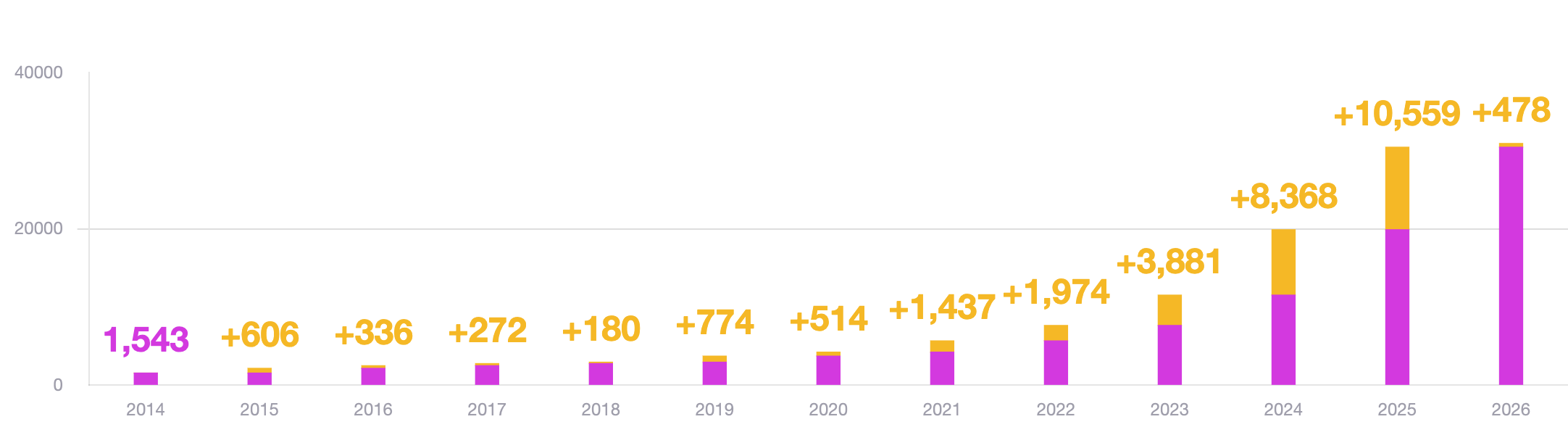
Vulnerabilities by Year - Source: WPScan Statistics
WordPress vulnerability discoveries hit record numbers in 2025. Not by a small margin. By a lot.
But it's not just about the total number. It's about how these vulnerabilities were discovered.
AI as a Security Tool
In 2024, security researchers started experimenting with AI for code review. By 2025, it was standard practice.
Here's what that looks like in practice:
This process used to take days or weeks. Now it takes hours.
Result: Way more vulnerabilities discovered. Not because plugins suddenly got worse. Because we got better at finding the issues that were always there.
The Flip Side
AI also made it easier to write vulnerable code.
Developers started using AI assistants to write WordPress plugins. The AI is good at writing functional code. It knows WordPress hooks. It understands PHP syntax. It can generate working plugins in minutes.
But AI assistants learn from existing code. And a lot of existing WordPress code has security issues. So the AI replicates those patterns.
Classic example: AI generates database queries using string concatenation instead of prepared statements. It works. It's fast. It's also vulnerable to SQL injection.
Why This Matters
If you run a WordPress site, here's what 2025 means for you:
Vulnerability disclosure is accelerating. Expect more frequent security updates. Expect them to be more critical. Expect exploits to appear faster after disclosure.
Zero-day windows are shrinking. The time between "vulnerability discovered" and "exploit in the wild" is getting shorter. Days, not weeks.
Automated attacks are getting smarter. Bad actors are using the same AI tools to scan for vulnerabilities. They're not manually hunting anymore. They're letting AI do it.
What You Should Do
Three things:
The Bigger Picture
2025 showed us that AI is a double-edged sword for WordPress security.
It's making security research more effective. That's good.
It's also making it easier to write vulnerable code and easier to exploit it. That's bad.
The sites that survive are the ones that stay on top of it.
Want to understand your WordPress site's risk surface? Try BoonRisk free.